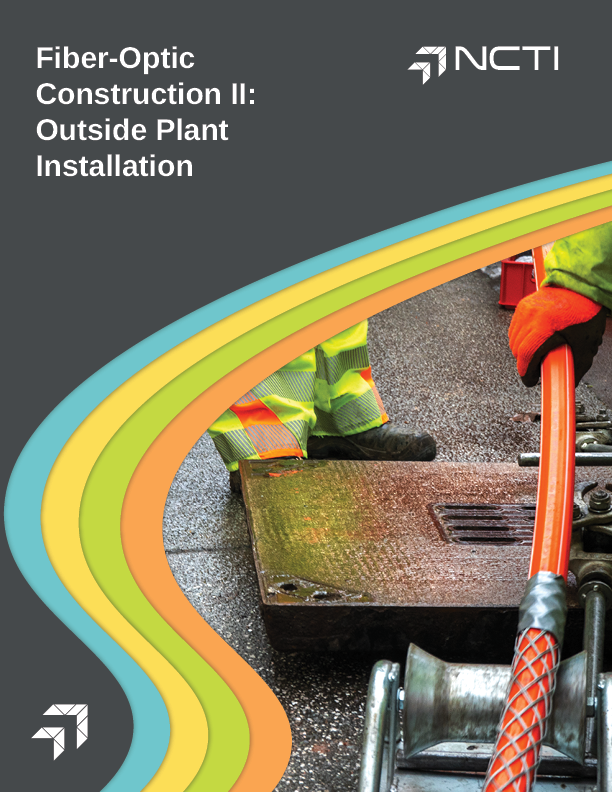
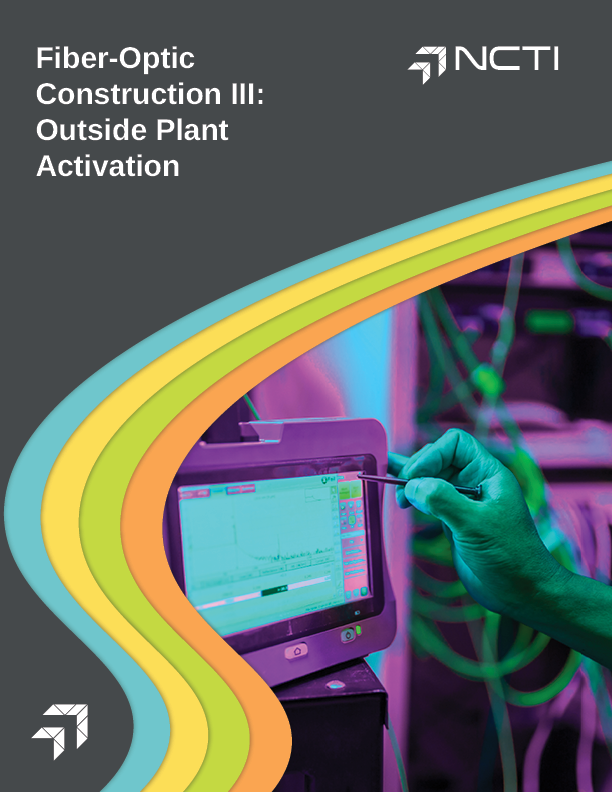
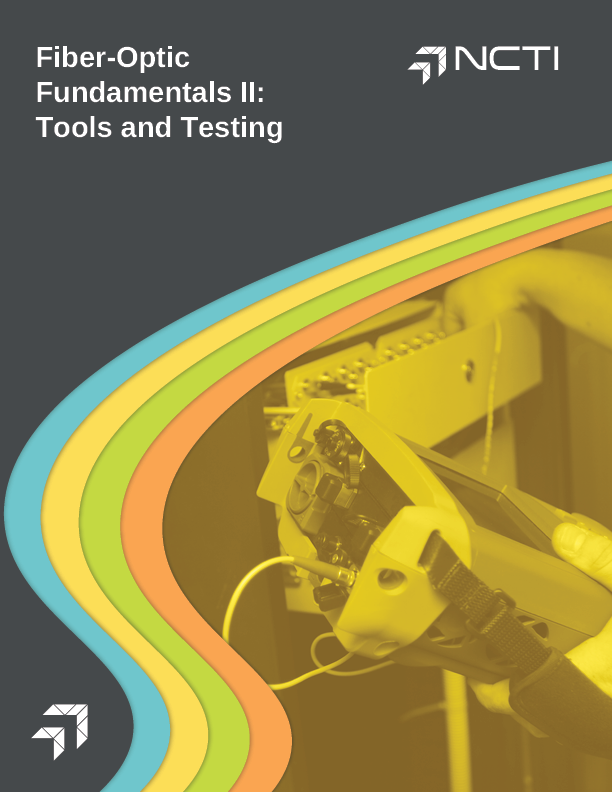
Fiber Installation & Activation

Course Overview

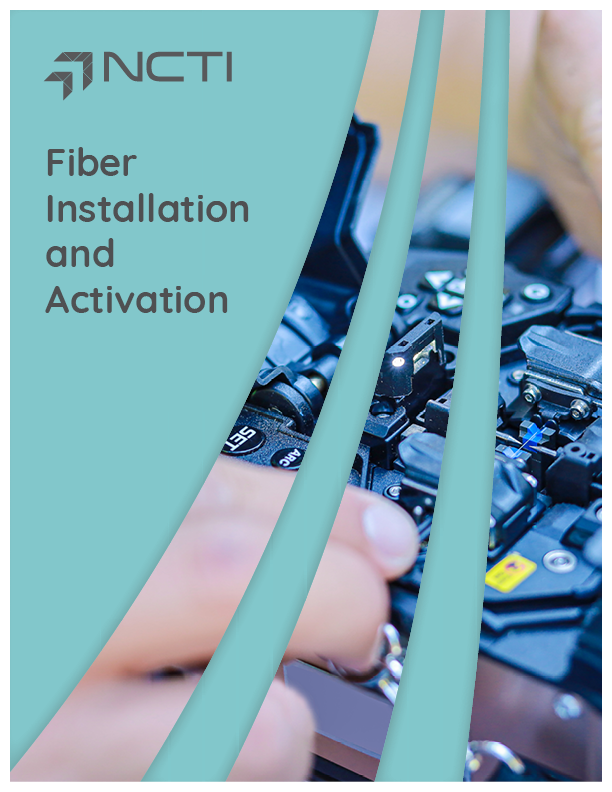
The NCTI® Fiber Installation and Activation course is a comprehensive resource that provides essential and updated knowledge for deploying fiber-optic cable in today's broadband networks. This course covers fundamental aspects such as optical transmission, modulation, and transport through optical fibers, as well as the reception and conversion of light back to electrical signals. Participants will gain insights into the various types of optical fibers, their characteristics, and practical applications.  
 
Furthermore, the course explores important topics like fiber-optic network architecture, topology, design, and construction practices. It equips students with the necessary skills to install and activate fiber-optic networks, including splicing techniques utilizing both mechanical and fusion methods. The course also provides a comprehensive overview of passive optical network (PON) access technologies, specifically fiber-to-the-premises (FTTP) topologies, encompassing GPON, EPON, RFoG, and next-generation access (NGA) architectures.
 
It's important to note that the course assumes prior knowledge and experience in RF Broadband Technology, establishing a foundation for participants to build upon during their study of fiber installation and activation.

The estimated completion time for this course is 28 hours. The maximum allotted time is four months from enrollment.
Identify the optical spectrum and wavelengths of light waves used for fiber-optics communications.

Describe the optical sources and receivers used for fiber-optics communications.

Describe safety materials and procedures for handling and splicing optical fibers.

Recognize common standards used in fiber‐optic transmission systems.

Describe the different optical fiber types and factors that determine how well light waves are transported through the fiber.

Identify different types of fiber-optic cable and their applications.

Describe optical connectors, patch panels, and ancillary optical devices such as splitters, pigtails, and attenuators.

Explain the procedures to prepare a splice closure and a fiber‐optic splice tray.

Describe how to splice fiber-optic cable.

Explain the considerations and specifications for proper installation of fiber‐optic cable.

Describe the different types of optical modulation and optical detection.

Explain the differences in coarse wavelength division multiplexing, wide wavelength division multiplexing, and dense wavelength division multiplexing technologies.
Identify optical network architectures and topologies, including fiber-to-the-user (FTTx) networks.

List the steps in the setup of an optical transmitter and receiver.

Define and give examples of an optical power budget.

Discuss the application and operation of centralized and distributed node powering.

Recognize the different passive optical network (PON) access architectures.
earn two hours of college credit

receive credit toward NCTI Master Technician certification

receive credit toward NCTI Telecom Specialist certification

receive an industry-recognized NCTI certificate of graduation

Related courses

NCTI-Cover-Empty
NCTI-Cover-Empty
NCTI-Cover-Empty
NCTI-Cover-Empty
NCTI-Cover-Empty
NCTI-Cover-Empty
NCTI-Cover-Empty
NCTI-Cover-Empty
NCTI-Cover-Empty
Share this page: