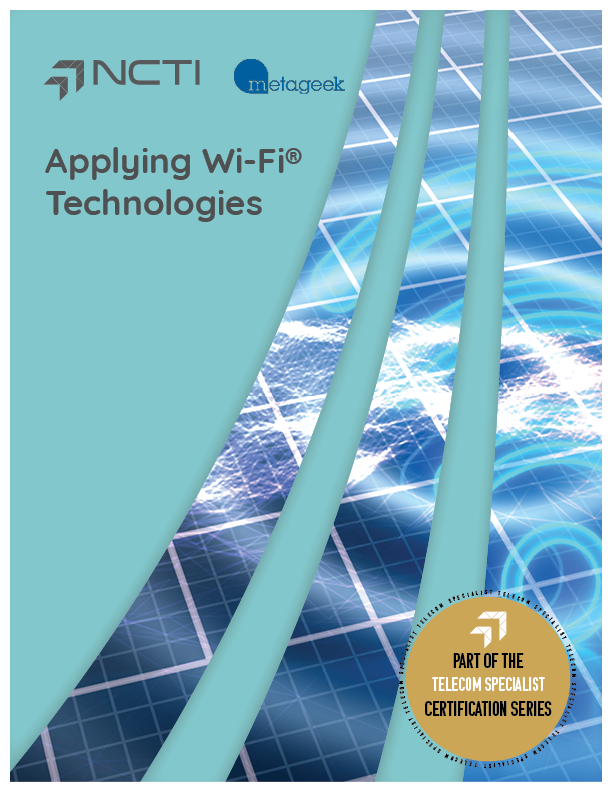
Applying Wi-Fi Technologies
Course Overview
The NCTI® Applying Wi-Fi Technologies course teaches the broadband technician about applying elements and principles that support installing and troubleshooting Wi-Fi within the home and in business environments. Wave propagation, channel assignment, interference, security, and frequency bands are fundamental topics that technicians working in the Wi-Fi environment must understand. While Wi-Fi signals have become commonplace, the need remains to understand how devices receive and process Wi-Fi data, troubleshoot interference, and optimize Wi-Fi within the home or business. The Applying Wi-Fi Technologies course is appropriate for all Wi-Fi installation and troubleshooting technicians working in a Wi-Fi environment, offering fundamental and advanced topics.
- Price: $420.00
- Seat time: 10h
- Course number: eb0249_03_JN
- Dynamic language translation available
- Category: Technical and Safety
The estimated completion time for this course is 12 hours. The maximum allotted time is four months from enrollment.
Course Objectives
Describe Wi-Fi modulation, frequency band characteristics (4, 5, and 6 GHz), and the IEEE 802.11 standards and amendments used in wireless networks.
Identify wireless router components and antenna features, and explain how beamforming is used for signal enhancement.
Describe how SISO and MIMO devices communicate and the MU-MIMO advantages over MIMO and SISO.
Explain the difference between SSIDs, ESSIDs, and passphrases, why WEP should not be utilized, and clarify the differences between WPA, WPA2, and WPA3.
Explain the significance of SSIDs and Wi-Fi security types, the difference between Wi-Fi frequency bands, and the impact of transmit power and channel width choices.
Describe Wi-Fi scanner operation, limitations, network graph, and how spectrum analyzers detect RF activity, including density and waterfall views, navigation waterfall, utilization measurements, and signature identification.
Describe Wi-Fi scanner operation, limitations, and network graph, and how spectrum analyzers detect RF activity including using the density view, waterfall view, navigation waterfall, utilization measurements, and signature identification.
Explain how to connect a modem, access the router's administration page, select appropriate channels, implement channel bonding, protect a wireless network, and educate users on security and guest network setup.
Compare mesh networking to traditional Wi-Fi, detailing managed Wi-Fi and its benefits, and explain mesh network app functions and troubleshooting techniques.
Explain Wi-Fi signal thresholds, optimal device placement, and attenuation factors.
Describe connecting a modem to a router, router administration, the SSID's purpose, proper channel selection, and bonding in various frequency bands.
Identify and describe network protection methods and security, the benefits of managed Wi-Fi, the difference between mesh and traditional Wi-Fi, mesh network app functions, and troubleshooting techniques.
Describe channel planning to mitigate CCI, including complications in the 5 GHz band and considerations for wider channels.
Explain the advantages and considerations for the 6 GHz frequency band, the relationship between transmit power and interference, wave propagation in Wi-Fi bands, and planning for multi-frequency networks.
Describe authentication in WPA2 and WPA3 networks, how to deploy PPSK and SAE with a complex RADIUS server, the mounting and centralized management of APs, considerations for deploying a PoE network, and the rationale behind disabling LEDs on APs.
Distinguish between CCI and ACI, recognize alternative frequency bands, and identify various Wi-Fi signatures, including those of cordless phones, baby monitors, Bluetooth, and gaming consoles.
Explain device interference, factors determining Wi-Fi speed, and IEEE amendments' supported frequencies.
Articulate band selection concerns and describe solutions for Wi-Fi dead spots, signal strength through obstacles, and methods to enhance signal strength within a home.

Identify wireless router components and antenna features, and explain how beamforming is used for signal enhancement.
Describe how SISO and MIMO devices communicate and the MU-MIMO advantages over MIMO and SISO.
Explain the difference between SSIDs, ESSIDs, and passphrases, why WEP should not be utilized, and clarify the differences between WPA, WPA2, and WPA3.
Explain the significance of SSIDs and Wi-Fi security types, the difference between Wi-Fi frequency bands, and the impact of transmit power and channel width choices.
Describe Wi-Fi scanner operation, limitations, network graph, and how spectrum analyzers detect RF activity, including density and waterfall views, navigation waterfall, utilization measurements, and signature identification.
Describe Wi-Fi scanner operation, limitations, and network graph, and how spectrum analyzers detect RF activity including using the density view, waterfall view, navigation waterfall, utilization measurements, and signature identification.
Explain how to connect a modem, access the router's administration page, select appropriate channels, implement channel bonding, protect a wireless network, and educate users on security and guest network setup.
Compare mesh networking to traditional Wi-Fi, detailing managed Wi-Fi and its benefits, and explain mesh network app functions and troubleshooting techniques.
Explain Wi-Fi signal thresholds, optimal device placement, and attenuation factors.
Describe connecting a modem to a router, router administration, the SSID's purpose, proper channel selection, and bonding in various frequency bands.
Identify and describe network protection methods and security, the benefits of managed Wi-Fi, the difference between mesh and traditional Wi-Fi, mesh network app functions, and troubleshooting techniques.
Describe channel planning to mitigate CCI, including complications in the 5 GHz band and considerations for wider channels.
Explain the advantages and considerations for the 6 GHz frequency band, the relationship between transmit power and interference, wave propagation in Wi-Fi bands, and planning for multi-frequency networks.
Describe authentication in WPA2 and WPA3 networks, how to deploy PPSK and SAE with a complex RADIUS server, the mounting and centralized management of APs, considerations for deploying a PoE network, and the rationale behind disabling LEDs on APs.
Distinguish between CCI and ACI, recognize alternative frequency bands, and identify various Wi-Fi signatures, including those of cordless phones, baby monitors, Bluetooth, and gaming consoles.
Explain device interference, factors determining Wi-Fi speed, and IEEE amendments' supported frequencies.
Articulate band selection concerns and describe solutions for Wi-Fi dead spots, signal strength through obstacles, and methods to enhance signal strength within a home.
Course Benefits
earn credit toward NCTI Telecom Specialist Certification
earn credit toward NCTI Master Installer Certification
receive an industry-recognized NCTI certificate of graduation
receive "Honor Graduate" designation with a score of 90% or higher on the first final exam attempt
earn credit toward NCTI Master Installer Certification
receive an industry-recognized NCTI certificate of graduation
receive "Honor Graduate" designation with a score of 90% or higher on the first final exam attempt
Share this page: