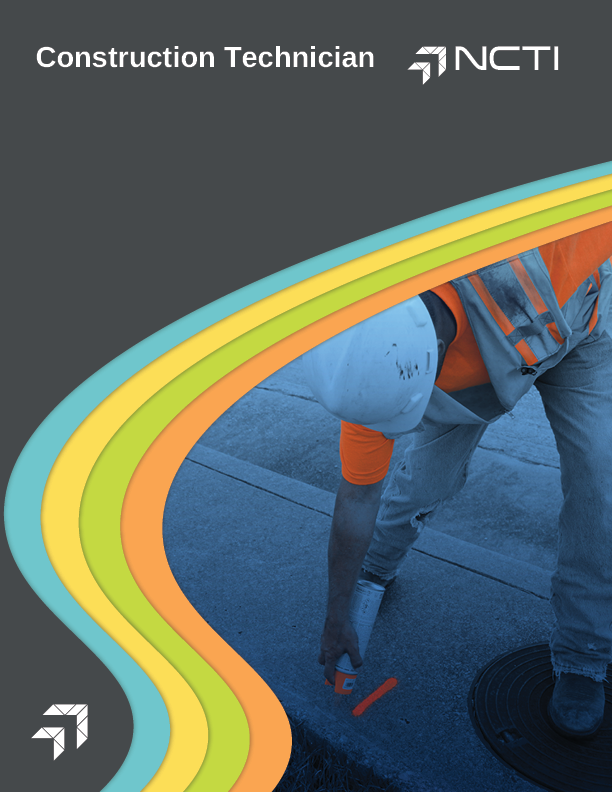
Construction Technician

Course Overview

As the demand for high-speed broadband continues to grow, the need for skilled professionals who can safely and effectively install and maintain fiber-optic infrastructure is more critical than ever. The NCTI® Construction Technician course provides a comprehensive introduction to the essential practices, tools, and safety standards used in outside plant (OSP) fiber-optic installation. Whether working in aerial or underground environments, technicians must understand both the physical and regulatory aspects of deploying fiber to ensure reliable service and long-term network performance.
 
Throughout this course, participants will explore the roles of key safety organizations, the proper use of installation equipment, and the step-by-step procedures for placing, securing, splicing, and documenting fiber-optic cables. The course covers both traditional and advanced techniques, including strand lashing, conduit pulling, and high-speed air-assisted cable blowing. By building this foundational knowledge, learners will be better prepared to work confidently in the field, minimize risk, and contribute to the success of fiber deployment projects.
 
Whether you're new to the broadband industry or seeking to enhance your understanding of outside plant operations, this course equips you with the essential skills and insights to perform the job correctly, safely, efficiently, and to industry standards.

The estimated completion time for this course is 18 hours. The maximum allotted time is four months from enrollment.
Evaluate and apply underground construction safety practices by identifying hazards, interpreting utility markings, and implementing proper procedures, equipment use, and personal protective measures.
Describe federal and state safety regulations, traffic control guidelines, and utility location procedures to ensure safe and compliant underground broadband operations.

Interpret broadband plant design maps by identifying and explaining the symbols that represent aerial and underground infrastructure, signal devices, power components, and fiber-optic elements.

Interpret the regulatory, legal, and organizational framework governing joint-use pole attachments, including the roles of federal, state, and local authorities, as well as standard-setting bodies.

Demonstrate understanding of joint-use pole agreements, responsibilities, and procedures by describing the roles of pole owners and attachers in managing access, safety, compliance, and recordkeeping.

Analyze the structure, components, and evolution of HFC networks by interpreting design maps, explaining the function of key RF and optical elements, and evaluating technological advancements such as DOCSIS 4.0, FDX, and advanced fiber types.

Explain the evolution and structure of hybrid fiber/coax (HFC) distribution architecture by identifying key components, boundaries, and design considerations that support reliable broadband service delivery.

Describe the coaxial portion of the HFC network, including equipment functions, applying troubleshooting methods, and performing maintenance tasks to ensure ongoing network performance.

Demonstrate knowledge of underground cable installation techniques by identifying and explaining the functions, operations, and safety procedures associated with static plows, vibratory plows, and chain trenchers.

Apply proper methods for trenching, backfilling, compacting, and site restoration to ensure safe, effective, and minimally disruptive underground cable installation.

Explain dry and fluid-assisted boring and excavation methods and identify equipment types, operational procedures, and safety protocols required for effective and secure underground construction.

Apply safety standards, codes, and best practices to the installation, handling, grounding, and documentation of outside plant fiber-optic cables in both aerial and underground environments.

Describe aerial and underground fiber-optic cable installation method, including clearance requirements, lashing and splicing techniques, conduit installation practices, and the use of pulling lines and air-assisted cable placement.

Related courses

NCTI-Cover-Empty
NCTI-Cover-Empty
NCTI-Cover-Empty
NCTI-Cover-Empty
NCTI-Cover-Empty
NCTI-Cover-Empty
NCTI-Cover-Empty
NCTI-Cover-Empty
NCTI-Cover-Empty
Share this page: